
Új néző
(New Spectator)
COMMUNITY DEVELOPMENT PROGRAM | A project by the Krétakör Foundation
.jpg)
The objective of this program, created by the Káva Cultural Workshop, the anBlokk Foundation, and Krétakör in collaboration, was to provide a forum for dialogue between Roma and non-Roma – that is, majority and minority ethnicity – inhabitants of two North-Eastern Hungarian settlements (Ároktő and Szomolya), with the help of the tools from theatre education, forum theatre, and the contemporary arts. We sought to evolve dramatic situations which members of the community could comment on freely, indeed shape, and through which they could disclose their everyday experiences.
According to our observations in these villages, despite the latent or be it overt tensions, a serious need for consultation presents itself, for which a contemporary artistic project can afford a more appropriate structure than a political event. The project made it possible for all participants to personally experience the strength of shared cultural experience and constructive cooperation in maintaining and developing a community.
In the story staged in the first village a young couple who moved to Ároktő found themselves faced with the village’s typical, lifelike problems. Every night the actors stepped in front of the spectators as actors and moderators. Through the subjects thrown up on given nights (e.g. Is it better to buy a house or a car? What should we do with our spiralling debts?) the viewers themselves could give advice to the young couple, and the actors built their reasoning into theatrical scenes.
Adolescents in the village worked out through a separate project how they imagine Ároktő’s future, which was followed by one the most pointed subjects of the programme: to stay in, or leave Ároktő? The villagers worked out their arguments in response to the question in small groups. In conclusion to the programme spectators could watch our video summarising the theatre nights.
In Szomolya we shot a short fiction film with four local youths, whose story they wrote themselves, and whose characters they played. Viewers of the film could get to know the calvary of a non-Roma guy from Szomolya who, at the cost of great grief, finally acknowledges his Roma love.
In the programme intended for adults we effected several amalgamations in order for the audience to pass the getting acquainted phase relatively quickly, and ensure more time remains for raising problems. In winding up our work in Szomolya we likewise screened a piece cut from reactions to the theatre nights.
CAST
Project manager: Gábor Takács
Artistic director: Árpád Schilling
Participants: Lilla Sárosdi, Sándor Terhes, András Sereglei, Viktor Bori, Gábor Gyombolai, János Kardos, Edit Romankovics, Gábor Takács
Financial manager: Rita Titkos
Communication officer: Flóra László
Researchers: Kata Horváth, Márton Oblath, Cecília Kovai, Balázs Berkovits
Activities for children: Márton Gulyás, Péter Fancsikai, Máté Tóth Ridovics, Flóra Bernáth
Music by Marcell Dargay
Documentary film by Péter Fancsikai, Gábor Péter Németh, Mária Takács
Props: Angéla Thiesz, Krisztina Balogh, Orsolya Kovács, Boglárka Szőlősi
Participation film: Márton Gulyás, Péter Fancsikai, Máté Tóth Ridovics, Csaba Csóka, Rozi Hamza, Zsanett Horváth, Andor Marci Balázs
Thanks to: János Vas, Mrs. Varga née Ildikó Kerékgyártó, Mrs. Monoki née Hajnal Bujdosó, Valéria Vancza, Attila Kalóz, Mrs. Györgyné Lázár, Mrs. Gyuláné Fülöp, Mrs. Szabó - Aunt Gizi, Mrs. Szabó - Aunt Magdi, Mrs. Vincéné Bányász
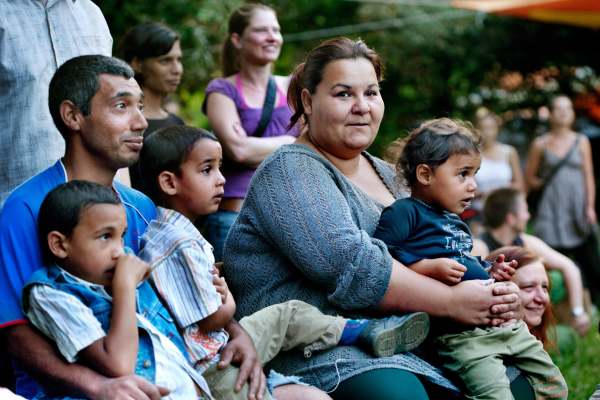
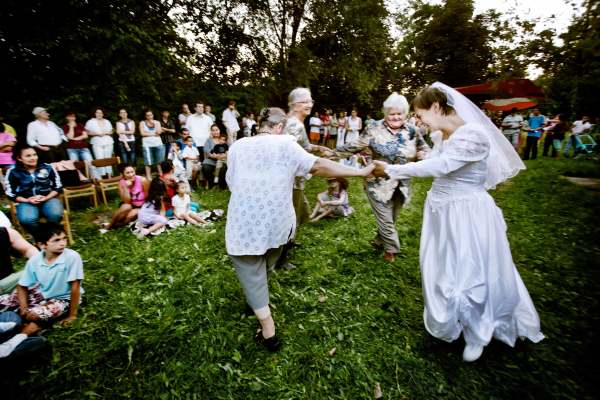
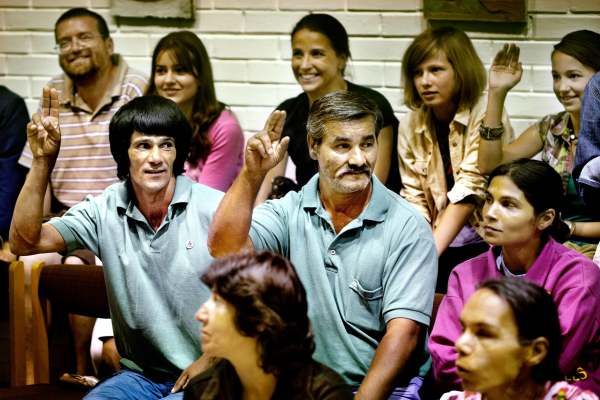
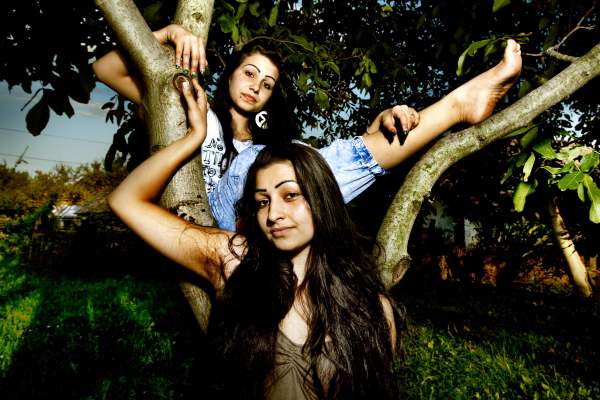
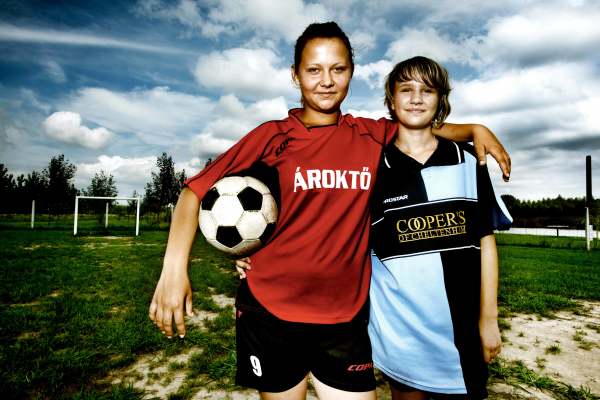
Photo: Máté Tóth Ridovics
PRESS
- Tamás Jászay: Az élet (mint) játék. Revizor online, 01. 09. 2010.
"For the moment I cannot report whether the scholarly investigation (of sociological and drama-theoretical bent) was successful. It is clearly possible to observe, however, that the village versus city opposition (which according to reports continued the following night with the incorporation of the Roma versus non-Roma conflict) indisputably touched the locals, who in fact enjoyed themselves remarkably despite being caught somehow halfway between the otherwise easily describable roles of actor and spectator. Instead of well-made drama, personal, not homogenous stories; instead of dramaturgy honed to punch lines, moments snatched from real life; instead of revelations a mass of question-marks. (…) A young Roma woman is about to push a pram into the yard; inside it a baby dozes. In the gate she runs into a prosperous, elderly, non-Roma couple, who “coincidentally” walked just that way with their approximately 5-6 year-old grandchildren. The girl kindly invites them to the “Theatre” – she pronounces the word like that, with respect and joy – but the grandmother handles it very gruffly, her grandchildren are too young for it, then hastens off with her family. There are things to do here yet.”
- János Szegő: Személyes kistotál. film.hu, 30. 01. 2011.
“The film and performance’s great virtue is that it doesn’t circumscribe only the Roma/non-Roma dimension’s questions but also the village itself. As we get into the performance, in addition to the Roma/non-Roma dualism the male/female, rich/poor, remainer/migrant, older/younger brother, jobless/employed, teacher/student, and young/old dualisms gain local significance too. This is why the hand-held camerawork imitative of naturalism, which needlessly crosses the coherent and self-critical anthropological perspective, is superfluous. The shaking – quivering, trembling, struggling to find focus – implies there is no fixed point from which the story could be narrated or displayed. The film and the project themselves demonstrate, however, in addition to the radical placement of humanist framing concepts and well-intentioned slogans in parentheses, that it is indeed possible to find a point or points of this kind, even if to do so we must move a great deal in our immediate environment, that is step behind our own selves, so that the individual fate, the personal close-up, is visible in the societal wide shot.”
- Tamás Vajna: Schilling Árpád: „Az új kurzus igazából több kommerszet akar”. hvg.hu, 09. 08. 2010.
- Júlia Váradi: Szabadság csapdahelyzetekben. Vasárnapi Hírek, 30. 01. 2011. (interview)
- Attila Balogh: Nem mindig találjuk a kulcsot. Interview with Gábor Takács, project leader Műút, 01. 10. 2010.
- Tamás Vajna: Az új kurzus igazából több kommerszet akar. hvg.hu, 09. 08. 2010. (interview)